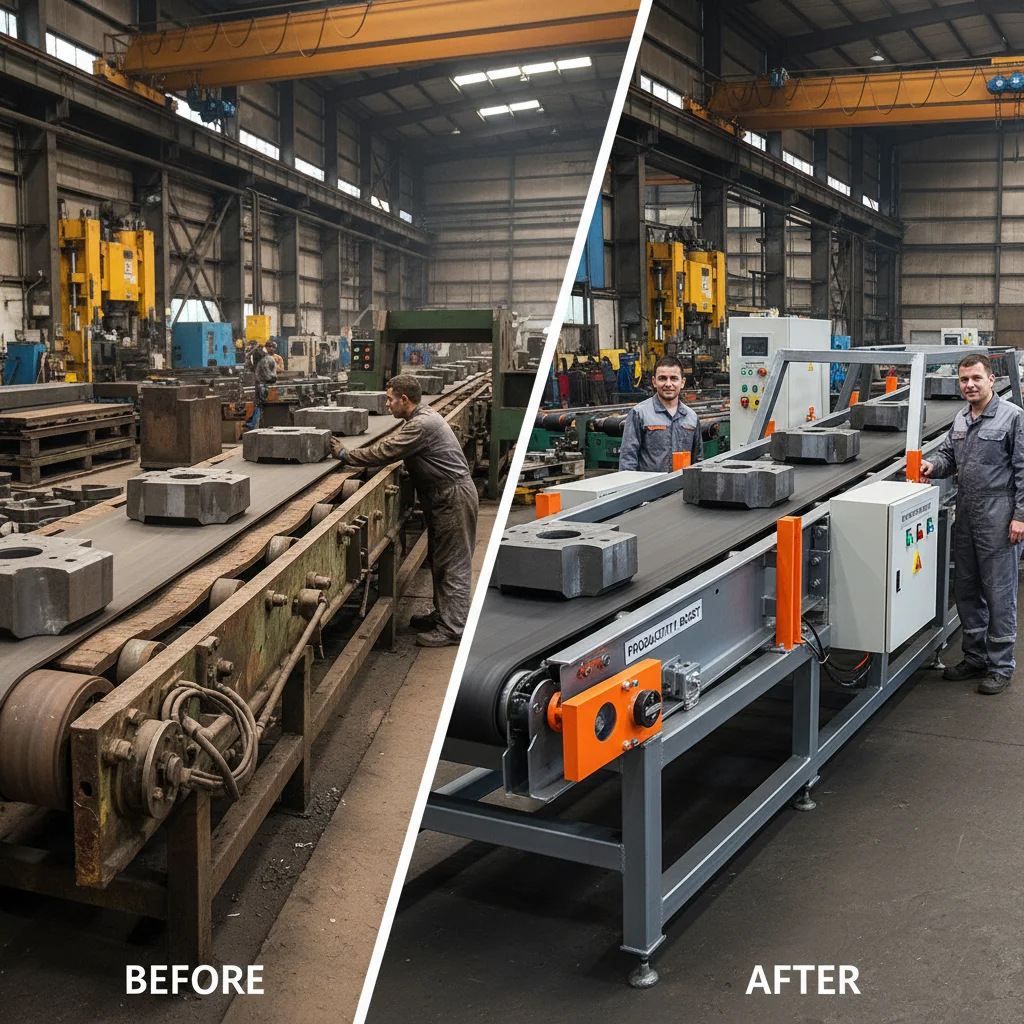
Conveyors and Material Handling: The Backbone of Modern Industry
At first glance, you might not think conveyors and material handling technologies are exciting — but they really are the unsung heroes of global industry. Imagine factories running smoothly, warehouses that never miss a beat, or humanitarian relief arriving swiftly in disaster zones. Conveyors and material handling systems empower all this and more. Globally, these technologies save billions in operational costs, boost safety, and enable supply chains to function efficiently. Understanding them isn’t just for engineers or logistics pros; it’s key to grasping how the modern world moves goods and resources. Let’s unpack what this vital industry is all about, why it matters, and what the future holds.
Global and Industry Context
The need for efficient conveyors and material handling is gigantic, touching nearly every corner of the globe. According to the International Organization for Standardization (ISO), over 80% of all manufactured goods rely on some form of material handling and conveyance in their production or distribution. The World Bank estimates that efficient logistics can reduce supply chain costs by up to 20%, a critical difference for emerging economies where infrastructure investments are still catching up.
But it’s not just about economics. The United Nations highlights the role of material handling in humanitarian aid — think of moving tons of emergency supplies quickly after natural disasters. Without robust conveyors and systems, relief efforts can be delayed, costing lives. The challenge is clear: how to design systems that are reliable, cost-effective, and adaptable across industrial and humanitarian settings.
What Are Conveyors and Material Handling?
In simple terms, conveyors are mechanical systems—belts, rollers, chains—that move materials or products from one point to another. Material handling includes everything involved in moving, protecting, storing, and controlling materials through manufacturing, warehousing, distribution, consumption, and disposal.
Put together, they streamline workflows, cut down on manual labor, and mitigate errors. As industries grow more complex and volumes rise, these technologies weave a subtle but powerful thread connecting raw materials to finished products — or crucial aid supplies to those who need them most.
Core Components and Key Factors
1. Durability
Conveyors must endure harsh environments — heavy loads, dust, moisture, or temperature swings. Choosing materials like stainless steel or reinforced plastics can extend lifespan, reducing downtime and maintenance.
2. Scalability
Many industries evolve rapidly. Modular conveyor systems can be expanded or reconfigured as demands change, offering great flexibility without huge costs.
3. Cost Efficiency
Balancing upfront investment with long-term savings is a tough nut to crack. Efficient design and energy-saving motors make a big difference, especially when scaled across an entire facility.
4. Automation Compatibility
Modern systems integrate with robotics and IoT sensors, enabling real-time monitoring and predictive maintenance — a game changer for uptime and operational insight.
5. Safety
Well-designed conveyors minimize injury risks — guards, emergency stops, and ergonomic heights are crucial, particularly in industries with manual intervention.
Mini Takeaway
Durability, scalability, cost, automation, and safety are the pillars that keep conveyors and material handling effective across industries and environments.
Global Applications and Use Cases
These systems propel industries worldwide. In North America and Europe, warehouses use complex conveyors with scanning and sorting to handle millions of packages daily. In remote mining operations in Australia or South America, rugged conveyors transport ore efficiently, often under extreme weather conditions.
Post-disaster zones in Southeast Asia have seen rapid deployment of modular material handling setups to transport medical supplies and food. Oddly enough, even small-scale farms in Africa are adopting conveyors for easier crop handling — improving productivity without large investments.
Industries like automotive, pharmaceuticals, food and beverage, and e-commerce owe much of their speed and quality control to smart material handling solutions.
Advantages and Long-Term Value
- Cost Reduction: Less manual handling lowers labor costs and injury claims.
- Sustainability: Energy-efficient motors and reduced waste improve environmental footprints.
- Reliability and Speed: Faster throughput means better customer satisfaction and competitiveness.
- Safety and Dignity: Workers operate in safer environments, respecting human factors.
- Innovation Enabler: Digital integration sparks process improvements beyond simple transport.
Frankly, these benefits build trust between companies and customers, investors, and employees, creating a virtuous cycle of improvement.
Vendor Comparison: Top Conveyor Systems
| Vendor |
Durability |
Automation |
Cost Efficiency |
Customization |
| ConveyorPro |
High |
Advanced sensors & IoT |
Moderate |
Extensive |
| MoveIt Systems |
Medium |
Basic automation |
High |
Limited |
| FlexTech Conveyors |
High |
Full automation-ready |
Moderate |
Highly customizable |
Product Specification: FlexTech Medium-Duty Conveyor
| Feature |
Specification |
| Belt Width |
600 mm |
| Max Load Capacity |
200 kg/meter |
| Motor Type |
Energy-efficient AC motor |
| Speed Range |
0.5 - 2.5 m/s (variable) |
| Material |
Stainless steel frame & nylon belt |
| Automation Support |
Ready for sensor integration & IoT |
Future Trends and Innovations
Looking ahead, the conveyor and material handling landscape is evolving fast. Automation continues to surge, with AI-powered sorting and robotics transforming warehouses into almost fully self-operating hubs. Oddly enough, sustainability is becoming a big driver — low energy consumption motors powered by renewable grids, recyclable materials for belts, and smart load balancing are reducing footprints significantly.
Digitization means systems not only move materials but also generate insight. Predictive maintenance alerts prevent costly breakdowns, and integration with ERP systems streamlines entire supply chains. You don’t just convey items anymore; you convey knowledge too.
Challenges and Solutions
Despite benefits, challenges linger. One major issue is the initial capital cost, which can be steep for sophisticated systems. Some industries hesitate to invest upfront despite clear long-term savings.
Another hurdle is integration complexity, especially where older facilities retrofit modern conveyors. Expert consultation and modular, plug-and-play designs alleviate this, helping businesses transition smoothly.
Maintenance demands skilled technicians, so training and knowledge sharing are critical. Plus, safety regulations differ globally—companies must carefully customize to local standards.
FAQs About Conveyors and Material Handling
- What industries benefit the most from conveyors and material handling?
- Manufacturing, warehousing, mining, agriculture, and humanitarian logistics rely heavily on these systems due to their efficiency and scalability.
- How quickly can conveyor systems be deployed in emergency situations?
- Modular and portable conveyor solutions can be set up within days, speeding relief operations where time is critical.
- Are conveyor systems energy-intensive?
- Traditionally yes, but modern designs feature energy-saving motors and smart controls that optimize power consumption, making them more sustainable.
- Can conveyors be customized for different materials?
- Absolutely. Belt types, frame materials, and automation features can be tailored for bulk solids, delicate goods, or hazardous items.
- How do companies choose between conveyor vendors?
- They consider durability, automation capabilities, customization options, total cost of ownership, and after-sales support quality.
Conclusion: Why Conveyors and Material Handling Matter Long-Term
In the end, conveyors and material handling systems are more than just machines — they're enablers of efficiency, safety, and innovation worldwide. From global factories pumping out goods, to aid agencies delivering life-saving supplies, they shape how we live and work. Investing in smart systems isn’t just about today’s bottom line but building resilient and sustainable supply chains for tomorrow.
If you want to explore conveyor solutions or improve your material handling setup, don’t hesitate to visit our website: conveyors and material handling. There’s a world of smart, flexible options waiting to revolutionize your operations.
A small reflection: It feels like conveyors quietly keep the world turning, and once you start noticing, you realize they’re everywhere—yet still often overlooked.
References
- International Organization for Standardization (ISO)
- World Bank - Logistics and Supply Chain Data
- United Nations - Humanitarian Affairs